Have you ever heard of menstrual discs?
What about tampons wrapped in paper instead of that plastic wrapper that somehow sticks to your fingers, falls on the floor, and makes the whole thing feel harder than it needs to be?
Or period swimwear?
When we started building the Franklie period and puberty workshop, we thought we had a pretty good handle on period products.
We weren’t complete beginners. We had used pads and tampons, moved into cups, and started swapping to period underwear a few years ago.
Then we started researching what actually exists now.
And honestly? The adults needed the workshop too.
Because the period aisle has changed a lot since many of us had our first awkward bathroom moment, but the conversations around periods have not always kept up.
We knew from the beginning that we didn’t want to stand at the front of the room and simply tell young people what a pad was. We wanted them to see products, hold them, ask questions, compare them, and understand that there is no one “right” way to have a period.
We also wanted their trusted adults to learn alongside them.
That part mattered. Because for a lot of adults, period education was one rushed conversation, one bulky pad, and a quiet understanding that this was something to manage discreetly and not discuss too much.
But today’s young people are growing up with more options.
Reusable pads.
Period underwear.
Menstrual cups.
Menstrual discs.
Organic tampons.
Period swimwear.
Products designed for sport, school bags, sleepovers, swimming, heavy days, light days, first periods and everything in between.
So we went looking for products we could bring into the workshop.
Ideally, we wanted local brands. That was harder than expected, so we widened the search to Australian and New Zealand brands. If they were built by fearless female founders, even better. If the packaging made periods feel less clinical and more normal, we were in. If the product made us say, “Wait, how does that work?”, it definitely had a place on the table.
And that became the real point of the period product activity.
It was not about telling young people which product to use. It was about showing them that they have choices. That their first period does not need to start with panic, secrecy or whatever happens to be at the bottom of someone else’s bathroom drawer.
It can start with curiosity.
It can start with information.
It can start with a trusted adult saying, “I didn’t have this when I was young, but let’s learn about it together.”
The classics, but better
We started with the products most adults already know: pads, liners and tampons.
But even here, things have changed.
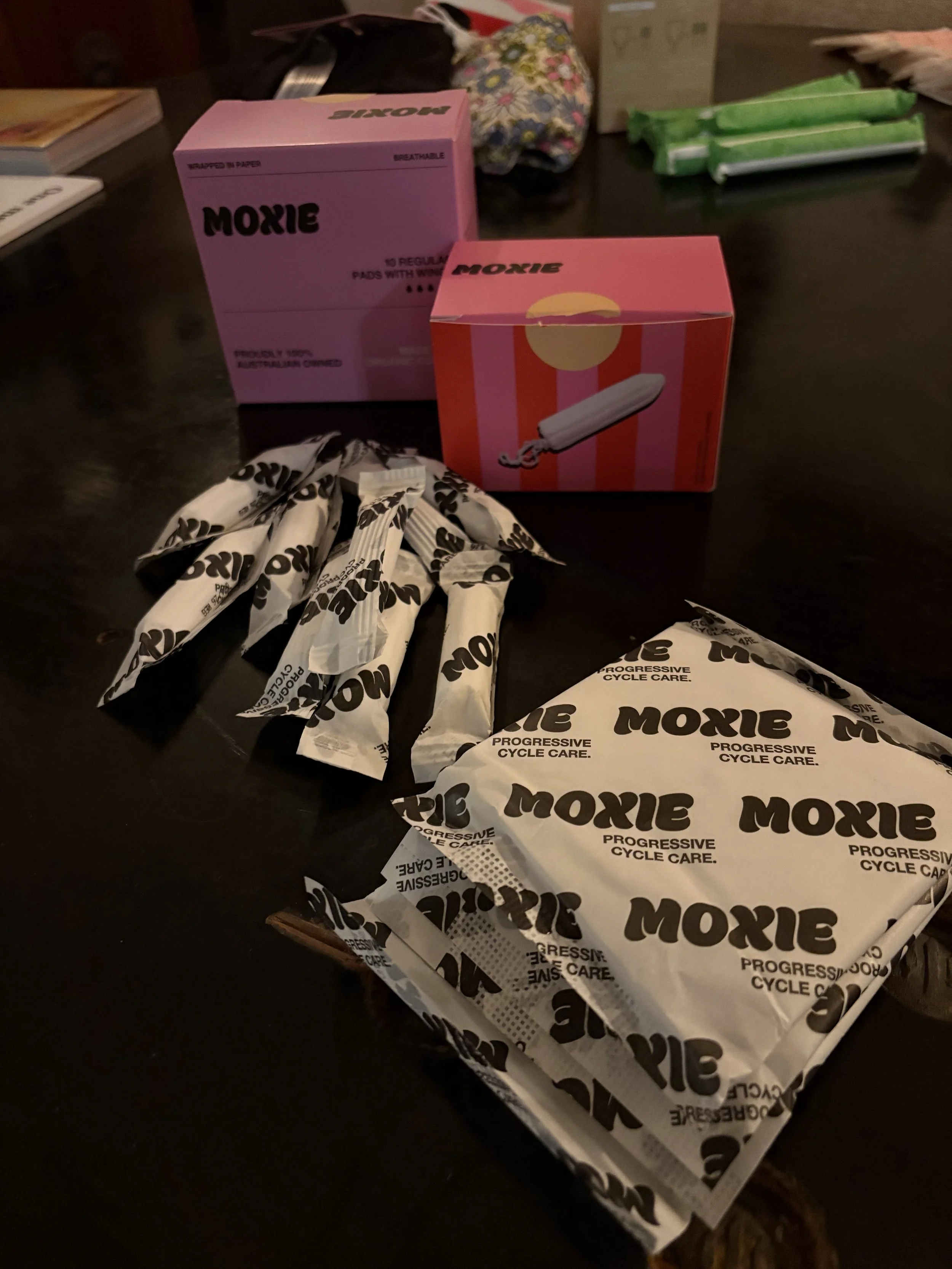
One of the first brands we came across was Moxie, an Australian period care brand that makes tampons, pads, liners, cups and self-care products.
Their organic tampons caught our attention because they felt familiar, but better. The ones we found are made from 100% organic cotton and wrapped in recyclable paper, which felt like a very welcome upgrade from the plastic wrappers many of us remember wrestling with.
We also added a few tampons with applicators to our shopping list.
Not because applicators are better, but because in some countries, including France, they are much more common.
For some people, an applicator can feel less intimidating than learning to insert a tampon using fingers.
For others, they may feel unnecessary or less environmentally friendly. The point was not to rank the options. It was to show that comfort, culture, body confidence and personal preference all play a part.
Periods are personal. Product choice should be too.
Cups and discs: the products that made us pause
Next came cups and discs.
This is where the learning curve got real.
Menstrual cups and menstrual discs both collect, rather than absorb, menstrual fluid. They are inserted into the vagina, worn internally, then removed, emptied and cleaned according to the product instructions.
Cups were not completely new to us. We had used them. We understood the basic idea.
But explaining them clearly to a room of young people and their trusted adults? That was different.
Discs were newer territory.
We reached out to a few Australian brands, and Hey Zomi was the most supportive. Hey Zomi describes itself as Australia’s first reusable menstrual disc brand, and their products are designed to collect menstrual fluid internally without suction. They generously sent us demo products, a new product to showcase, and an educational slide deck to help us explain how discs work in a simple, age-appropriate way.
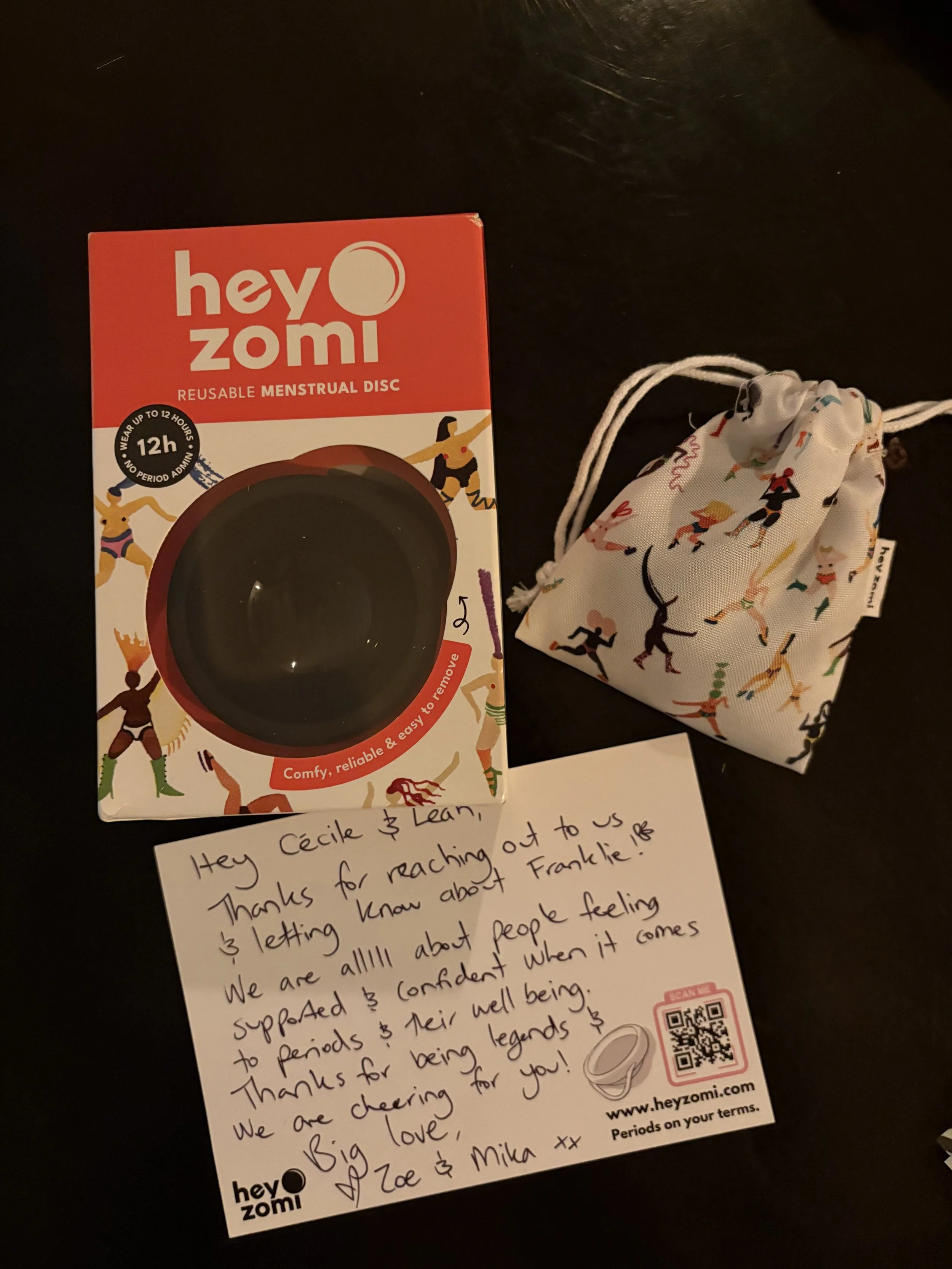
When the parcel arrived, Mika had included a handwritten card.
That card is staying in the Franklie archives forever.
It was the first real note of encouragement we received from someone already working in the period care space, and it meant more than she probably realised.
For the menstrual cup, we picked up one from TOM Organic at our local supermarket the day before the workshop. Very organised, obviously. Their cup is made with 100% medical-grade silicone, comes with a steriliser case, and gave us a simple way to show what a reusable cup looks and feels like.
Reusable pads: not what we pictured
Then came reusable pads.
And we’ll be honest: some of us still had an outdated picture in our heads.
Reusable pads sounded practical, sustainable and sensible, but not necessarily exciting. Then we opened the parcel from Hello Period, and immediately had to update the story in our own minds.
Hello Period is based in New Zealand, so not Australian, but close enough for a neighbourly cheer. They are also a certified B Corp, which gave them an extra tick for us.
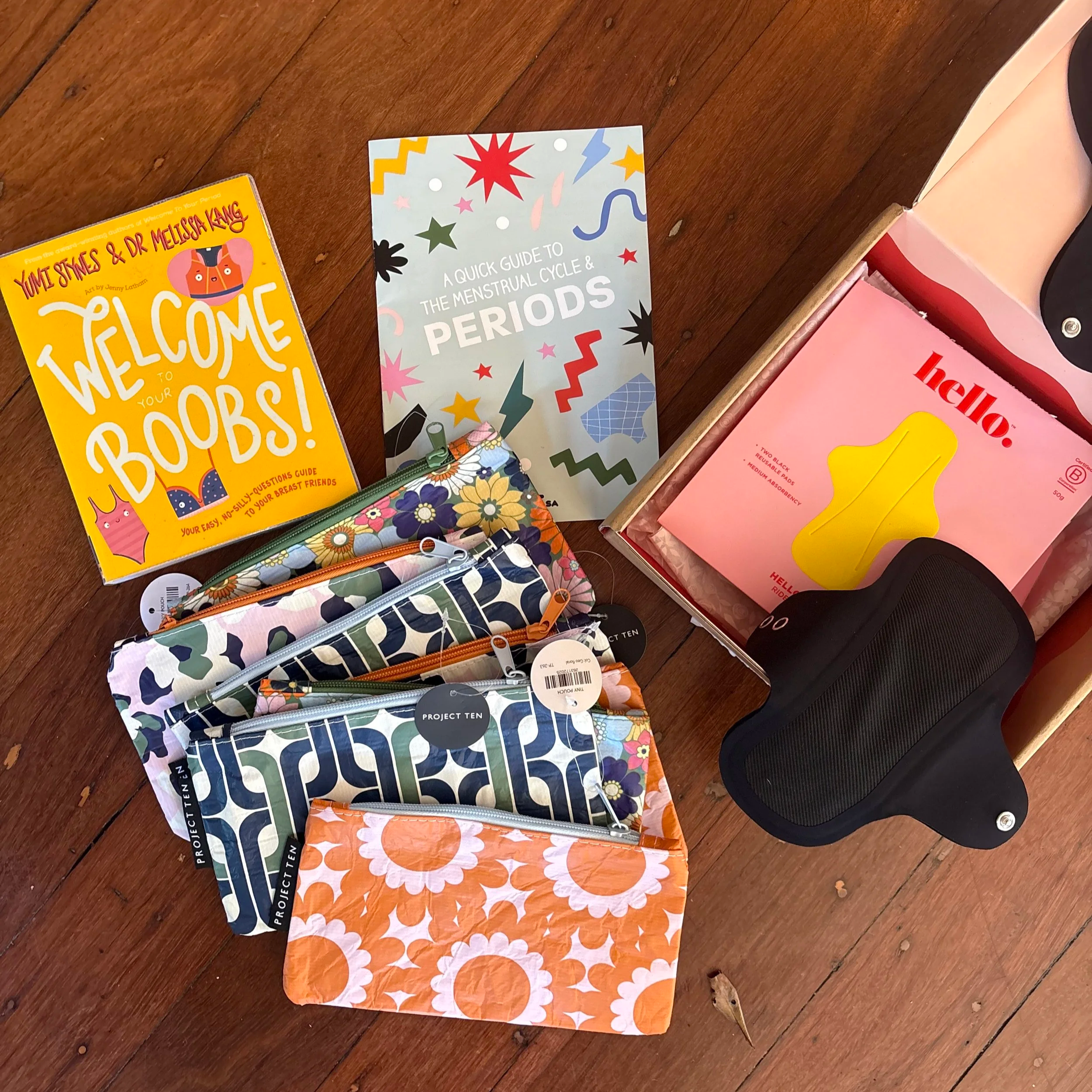
Their reusable pads were well designed. The colours felt modern. The whole thing felt more like opening a product you were curious about than something you were supposed to hide in the bottom of a drawer.
That matters.
Because when young people are introduced to periods for the first time, the design and language around the products can either reinforce shame or gently undo it.
A reusable pad can still be practical. It can still be washable. It can still be a responsible choice. But it can also look good. It can feel soft. It can be something a young person is not embarrassed to pick up and ask about.
That was the shift we wanted in the workshop.
Not “here is the one product you should use”.
More like, “look how many options there are, and look how differently they can feel”.
Period underwear and the grown-up gasp
If reusable pads made us rethink what “practical” could look like, period underwear made the adults lean in.
For the workshop, we ordered period underwear from Modibodi, one of Australia’s best-known leakproof apparel brands. We specifically chose some teen-friendly options, including floral designs, because we wanted the products to feel approachable for young girls, not clinical.
This was important.
A plain black pair of period underwear can be great. But for an eight-year-old or ten-year-old seeing these products for the first time, a softer pattern or more familiar shape can make the whole thing feel less confronting.
The adults were curious too.
How do you wash it?
How much does it hold?
Does it feel like normal underwear?
Do you wear it on its own?
What happens at school?
What about overnight?
These are exactly the questions we wanted people to ask.
Because period confidence does not come from pretending everything is simple. It comes from making space for the questions that feel too awkward to ask.
Period swimwear: the “wait, what?” moment
Then came the product that probably surprised us the most: period swimwear.
Yes. Swimwear.
Designed to be worn in the pool or at the beach while on your period.
We ordered Modibodi teen period swimwear because we had a feeling it would create a reaction, especially with the adults. And it did.
At first, it was hard to wrap our heads around. We had questions. Many questions. How does it work in water? What happens when you get out? Would you wear anything with it? Is this for light days only? How would you know?
And again, that was the point.
Not every product will be right for every body, every flow or every situation. But knowing that period swimwear exists changes the conversation. It shifts the story from “what do I have to miss out on?” to “what options might help me keep doing the things I love?”
That feels big.
Because for young people, periods can easily become tangled up with embarrassment, sport, school camps, pool parties, sleepovers and a fear of being caught out.
A product like period swimwear does not solve all of that. But it can open up a better conversation.
And that is where confidence starts.
The pouch that pulled it all together
Once we had the products, we needed something to put them in.
We had a very clear idea of what we wanted for the first period packs: something small enough to fit in a school bag, discreet enough to take to the toilet, and big enough to hold more than one product.
We also wanted it to feel good.
Not like a medical kit.
Not like an emergency pack.
Not like something to hide.
Something bright, practical and confidence-building.
The original inspiration came from a French brand, but after a reverse image search, we found Project Ten, an Australian brand known for colourful recycled bags and pouches.
We were not completely sure the size would work until the order arrived. But when it did, we were genuinely excited. The pouch was exactly what we needed. Colourful, strong, easy to carry, and big enough to hold a reusable pad or pair of period underwear.
It turned the products into a pack.
And the pack into something a young person could actually use.
One day, we would love to have Franklie-branded versions. But for our first workshop, these were perfect.
What we learned
By the time the workshop table was set up, it looked nothing like the period education many of us grew up with.
There were tampons and pads, yes.
But there were also cups, discs, reusable pads, period underwear, swimwear, liners, pouches and enough questions to fill the whole session.
And honestly, that felt right.
Because periods are not one product. They are not one experience. They are not one conversation delivered once and never spoken about again.
They are something young people deserve to understand over time, with trusted adults who are willing to keep talking, keep learning and keep making the topic feel normal.
And they are something adults are allowed to keep learning about too.
The product you used as a teenager might not be the product that suits you later in life. Your body can change. Your flow can change. Your comfort can change. Pregnancy, birth, hormones, sport, lifestyle, health, age and confidence can all shift what feels right.
So knowing what exists is not just useful for young people getting ready for their first period. It is useful for all of us.
The biggest lesson for us was not that period products have changed, although they absolutely have.
It was that the conversation needs to change with them.
Young people deserve to know what options exist. Adults deserve to feel equipped to explain them, and also free to ask their own questions, try something new, and realise they do not have to keep using a product just because it is what they started with.
All of us deserve to move past the idea that periods are something to whisper about, hide or figure out alone.
So, thank you to the brands and founders making period care better, smarter, more sustainable and more human.
And thank you to the young people who reminded us that curiosity is the best place to start.
What should we learn about next?
We know we have only scratched the surface.
So tell us: what period products, brands or clever little innovations should we learn about next?
What did you discover recently that made you say, “How does that even work?”
And what do you wish someone had shown you when you were younger?
If this made you say “wait, what?”, imagine what your child might be wondering.
Our Period & Puberty Workshop creates a safe, fun and practical space for young people and their trusted adults to learn together, ask questions and explore the products that actually exist now.